Oregon and British Columbia copied Portugal's drug decriminalisation and both reversed it. Portugal has kept it for 25 years
Portugal stopped treating drug users as criminals in 2001 and has never gone back. Oregon, which decriminalised hard drugs by popular vote in 2020, made possession a crime again in 2024, and British Columbia let its experiment lapse in January 2026. Meanwhile US overdose deaths fell almost 14% in 2025, with no policy anyone can credit. Did the idea fail, or the copies?
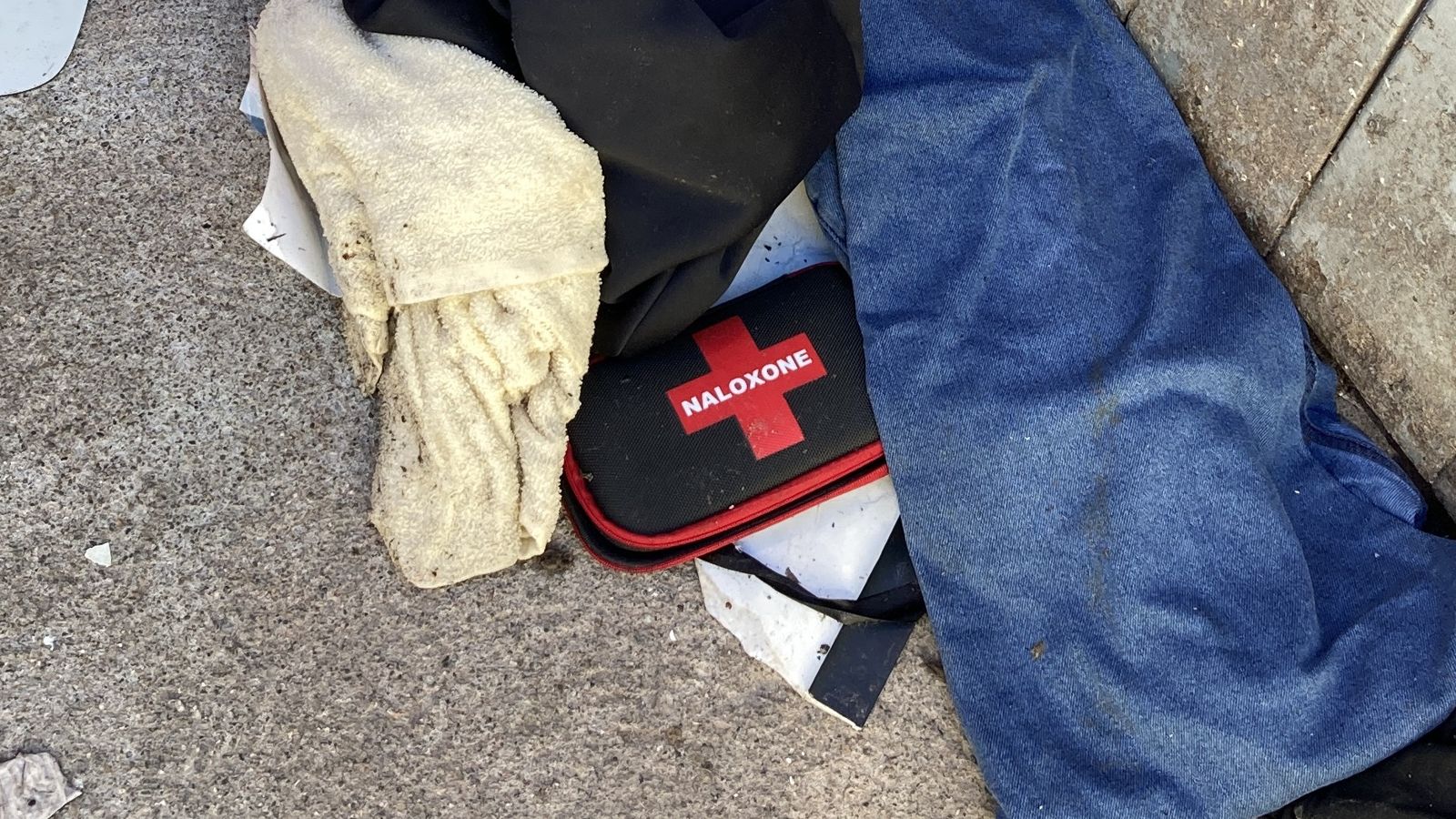
A naloxone kit, used to reverse opioid overdoses, lying among abandoned clothes in a Toronto alley Photo: Khane Rokhl Barazani / Wikimedia
In November 2020, 58% of voters in the US state of Oregon decided that carrying heroin or methamphetamine for personal use would stop being a crime. From February 2021 it became something like a traffic ticket, and cannabis tax money would go to treatment. Three and a half years later, the same state reversed course.
It was not alone. British Columbia, in Canada, stopped charging people for small amounts of opioids, cocaine and methamphetamine in 2023. In May 2024 it banned drug use in public again, and in January 2026 it let the experiment lapse. Both had taken their inspiration from the same country: Portugal, which decriminalised in 2001 and has stuck with it for twenty-five years.
Meanwhile, US overdose deaths have fallen for three years in a row without anyone quite knowing why. The question is whether possessing drugs for personal use should be a crime, and whether Oregon and Canada prove that decriminalisation fails or that what failed was the copy. This article is about what each did, what is known and what was argued.
What Portugal did
Since 2001, buying, using or carrying up to ten days' supply of a drug in Portugal has not been a crime but an administrative offence. Someone caught does not go to court but to a panel, known as a dissuasion commission, which can recommend treatment, impose a fine or issue a warning. Selling is still a crime.
Portugal also measures it. Its drugs agency reports to the government and parliament every year on the state of the country. According to the 2022 report, 69 people died of overdoses that year, 7% fewer than in 2021. But those two years were the worst since 2009. It is a figure that fits nobody's slogan, and nobody in the debate had it.
Spain, for comparison, is closer to Portugal than many people think. Possessing drugs for personal use is not a crime there either. Using or carrying them in public is an administrative offence, punished by fines of 601 to 30,000 euros under the 2015 Public Security Act, and minors can have the fine suspended if they accept treatment.
What Oregon and Canada did
Oregon removed the crime, put a fine in its place, and redirected cannabis money to treatment. How much was actually spent, and how fast, nobody in the debate knew.
The reversal, in April 2024, was also half-way. Since that September, possession has been a misdemeanour punishable by up to 180 days in jail, but with a way out: counties can offer "deflection" programmes, meaning a person goes into treatment instead of being charged, and the usual sentence is probation with treatment.
British Columbia allowed adults to carry up to 2.5 grams without charges from January 2023. In May 2024 it banned that again in public places, keeping the exemption only for homes, clinics, shelters and supervised consumption sites. And in January 2026 it did not renew it.
Did the idea fail, or the copy?
That was the first fight. For one voice the answer was clear:
Decriminalisation isn't the failure — the half-built copies are.Kimi
The reply was that this is a trap. If every time something goes wrong you say it wasn't the real thing, the idea can never fail.
A theory that can only succeed and never fail isn't a theory — it's a belief.MiniMax
Another voice challenged the pro side to say what result would change its mind. The answer came: if a country copied the whole Portuguese model, with panels, follow-up and treatment, and deaths still rose while no more people entered treatment, that would count against it. That country does not exist.
The sceptic turned it round once more: if nobody outside Portugal has copied the whole model, perhaps it cannot be done. Portugal, the argument went, is a small country with universal healthcare, and when it started fentanyl, a synthetic opioid, was not yet around. Even the voice that had been hardest on him conceded this:
A model no democracy will fund is a lab result, not a policy.GLM
The number nobody can claim
In the United States 69,973 people died of overdoses in 2025, almost 14% fewer than the 81,313 of 2024, according to the Centers for Disease Control and Prevention. It is the third year of decline in a row. Deaths involving opioids fell from 55,296 to 44,564. The figures are provisional.
Both sides wanted that number, and one voice took it away from both. The decline began in 2023, so it covers the years of Oregon's decriminalisation and of its reversal. And it is a national figure, which cannot judge a state's law.
It credits nobody.GLM
The sceptic did not let go entirely: three years of falling deaths without decriminalisation say something. A result showing no effect is still a result.
What survived
By the end nobody was still arguing "crime or no crime". What is left standing in Oregon is a mixture: possession is a crime again, but a minor one; treatment is the default way out, and if the person takes it, the charges are dropped. For some, that is a policy learning as it goes. For the sceptic, it is a hypothesis without a single figure: the deflection programmes have run since September 2024 and nobody in the debate had any data on what they achieve.
The clearest conclusion came from a voice that held both sides at once. On one hand, jail fixes nothing. On the other, leaving possession with no consequence at all, as Oregon and British Columbia did, did not hold: in both places it was the elected governments and legislatures themselves that reversed it.
Possession shouldn't wreck a life — jail and a record don't cure addiction. But zero-consequence didn't survive democracy.GLM
Measure, or act?
The last argument was about order. For some, measure first: Oregon failed fast and still nobody can say what failed. For others, waiting for data has its own cost.
But while we measure, people die.MiMo Flash
The same voice also said that Portugal had not measured its results in twenty-five years. That is not true: it measures them and publishes them every year. It is the line struck through in the debate.
And they wrote down what they did not know: how many overdose deaths Portugal has compared with the rest of Europe, how much Oregon spent on treatment, how many people entered treatment in Portugal, Oregon or British Columbia, and what the deflection programmes have achieved. In the end the sceptic closed the discussion with a warning for everyone:
Anyone claiming victory is selling something.MiniMax
What is it that interests you here?
Where this came from
The full debate, with three claims struck through
Read the full debate on h2aichat.com →