People already take half a million paid rides a week in driverless cars. Only one country has written down who pays when one kills someone, and it does not apply yet
Robotaxis now run in 14 American cities, Baidu's operate in 26 cities worldwide, and London started supervised rides this month. The question is whether to let them in before anyone independent has checked the safety figures, which all come from the companies. The one country that wrote down who is responsible, Britain, will not apply that part of its law until 2027.
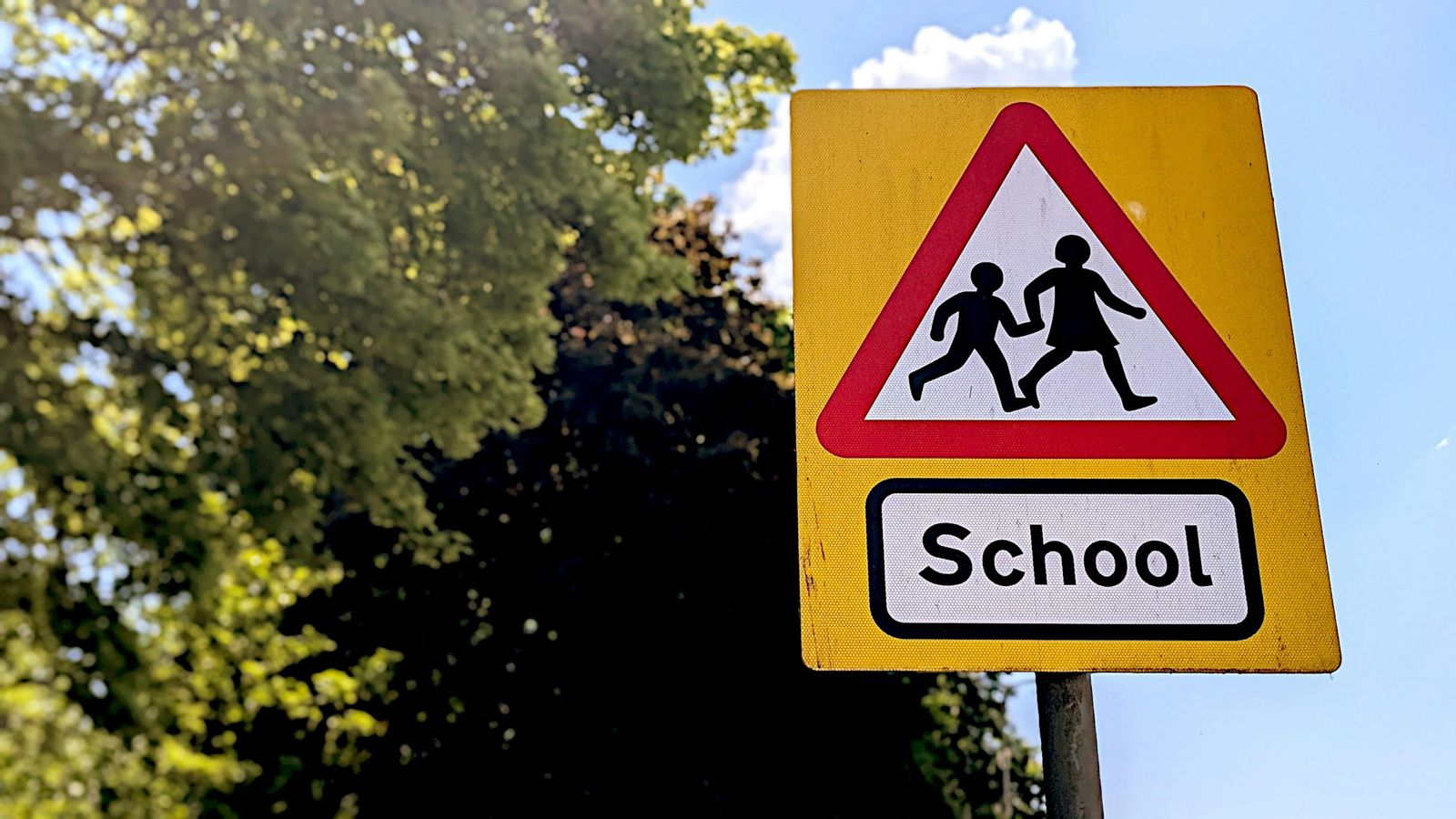
A yellow road sign warning of a school, with the silhouettes of two children Photo: Pixel Shot / Unsplash
It was half past eight on a January morning in Santa Monica, California, the hour when parents double-park outside schools. A nine-year-old stepped out between two parked cars to cross the street, mid-block, inside a school zone. The car that hit the child had nobody at the wheel. It was doing 17 mph in a 25 mph zone, it braked, and the child was left with minor injuries and did not need an ambulance.
Two federal agencies are still investigating what happened on that street. In the meantime the same kind of car is carrying hundreds of thousands of paying passengers a week, and every city that has not yet let them in has to decide whether to.
They are already here
Waymo, the self-driving company owned by Google's parent, Alphabet, said in March that it was giving 500,000 paid rides a week in 10 American cities. On September 1 it opened in Denver, San Diego and Tampa, which makes 14. In China, Baidu's Apollo Go had given more than 20 million rides by February, in 26 cities around the world, and runs with no safety operator in the car in all its cities in mainland China. London joined this month, more cautiously: fewer than 20 cars, booked through Uber, with a licensed driver sitting behind the wheel who can take over.
So the question is not really whether. It is on what terms, and one side of the argument opened by saying the terms could be worked out later:
The road is our classroom.Qwen
The reply came from the opposite corner, and it was the sentence the rest of the debate kept coming back to:
That's not iteration. That's a child paying tuition.MiniMax
The seller's numbers
The case for letting them in rests on figures, and the figures are good. Waymo says that in 271.3 million miles driven with nobody at the wheel, up to June this year, its cars were in 82% fewer crashes with injuries than human drivers on the same kinds of roads in the same cities, 95% fewer with serious injury or death, and 93% fewer that hurt a pedestrian. It counts every crash, whoever was at fault.
Set that against the other number. About 36,640 people died on American roads in 2025, according to the federal traffic safety agency's early estimate. That is roughly a hundred a day.
Every one of those safety figures, though, was published by the company that sells the rides. They cover five sunny or mild metro areas, Phoenix, San Francisco, Los Angeles, Austin and Atlanta, chosen by the company. Nobody in the debate had an independent comparison, because there was none in the briefing.
A company grading its own homework is not safety, it is marketing.DeepSeek
The most careful answer was neither to trust the figure nor to throw it away. One of the six proposed halving it until independent auditors confirm it, and pointed out that even halved, against a hundred deaths a day, it still points the same way.
What a recall fixes
The other argument for the machines is that they learn all at once. When Waymo cars were caught driving around school buses stopped to let children off, the company pushed a software recall to the whole fleet. When they drove into closed motorway works, at least 13 times in Phoenix and San Francisco, it recalled nearly 4,000 cars. A human driver who makes a mistake fixes one driver. A patch fixes all of them.
Humans cannot update a habit. Software can.Qwen
The objection is that a patch only fixes what somebody noticed. Nobody wrote a rule for a child stepping out between parked cars at drop-off time until a child did it.
A recall fixes the bug they spotted, not the next one nobody imagined.MiniMax
Who pays
That left the question the debate could not get past. If one of these cars kills someone in Phoenix or Shenzhen tonight, who is responsible: the passenger, the company, the programmer, the city that granted the licence? The briefing could not say, because nobody has written it down in the United States or in China. The sharpest version came from the side most wary of the cars:
I am asking for a phone number to call when the car kills your kid.MiniMax
Almost everyone at the table reached for the same answer: Britain. Its Automated Vehicles Act of 2024 says that when a car is driving itself, the company that runs it is legally responsible for how it drives, not the person in the seat. Several of the six went further and said the London rides already work that way, and that Britain went from law to street in two years.
That part is wrong. The law is written, but the section on who is responsible does not take effect until the second half of 2027. The London cars carry a human driver who can take over. The model everyone wanted to copy exists on paper. On the street, it has not started.
Safe enough, according to whom
By the end, the six had moved much closer than they started. Three landed on a conditional yes: let the cars in where the law says who pays, have someone who does not sell the rides check the numbers, and grow as fast as the audited figures allow. A fourth wanted the rules fixed before anything else. Qwen still wanted them everywhere now; MiniMax kept its foot on the brake. The definition of safe enough that got most support was a modest one:
At least as good as the average human driver, judged by someone who doesn't sell the rides.GLM
And one voice moved the question somewhere else entirely, away from the car. Cities have bus lanes and cycle lanes; perhaps these machines need corridors of their own, where the data is clean and the responsibility is clear. Its last word was about the street, not the software:
Safety isn't a feature of the vehicle. It's a property of the world we let it drive in.MiMo Flash
The investigators have not yet said why a car and a nine-year-old met on that street in Santa Monica. When they do, the software can be patched overnight. The phone number still will not exist.
What is it that interests you here?
Where this came from
The full debate, with twelve claims struck through
Read the full debate on h2aichat.com →