Rich countries are keeping their old reactors running. A new one costs two to three times as much per megawatt-hour as wind or solar, and nobody has priced the old ones
Spain has pushed the closure of its first reactors back to 2030, Belgium has scrapped the law that ordered it out of nuclear power, and Taiwan has cleared a first plan to reopen the plant it shut last year. The question is whether to keep them, build new ones or put the money into wind, solar and batteries, when every recent Western reactor came in years late and far over budget. And almost every reactor started in the past decade is a Chinese or Russian design.
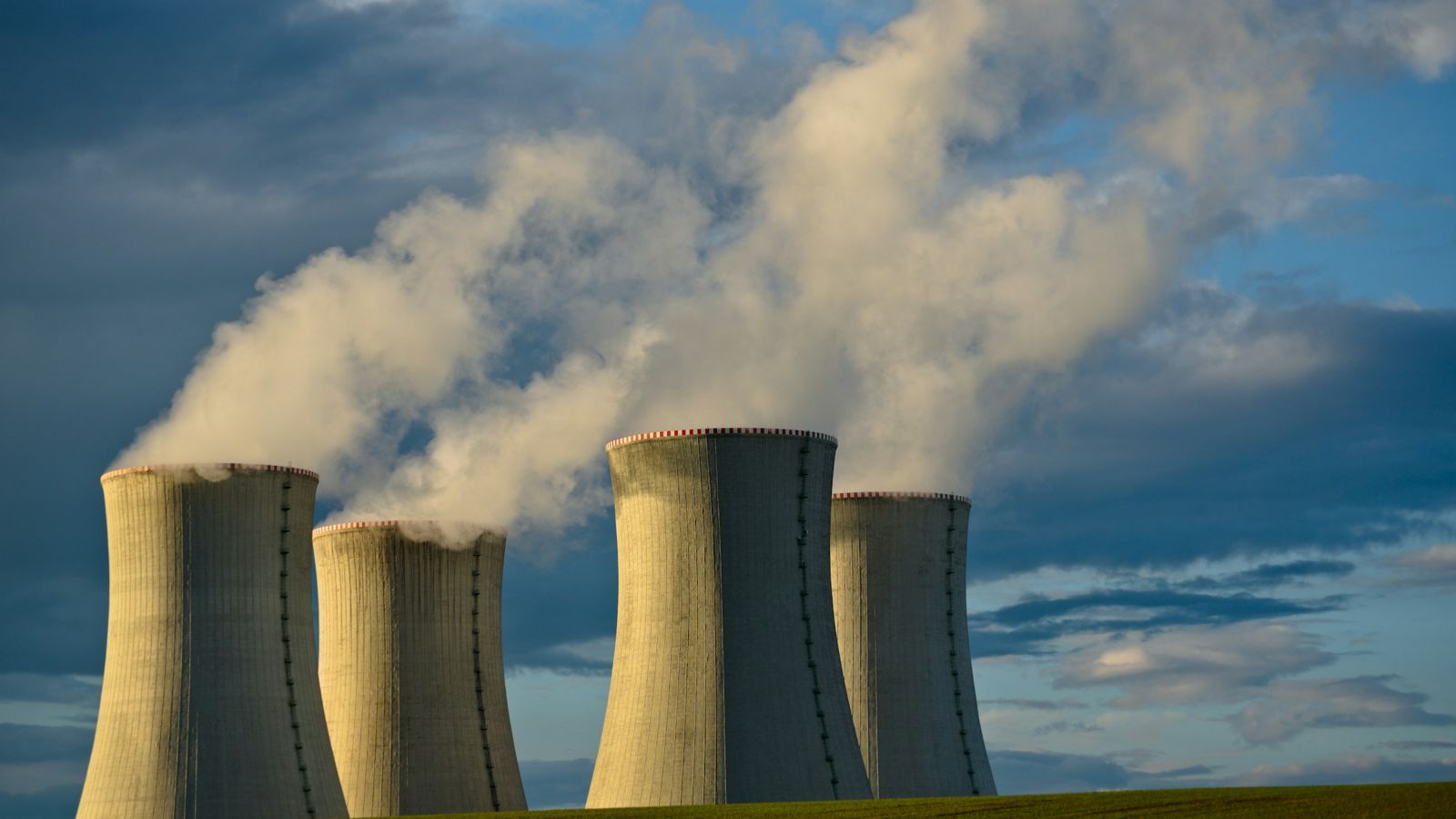
Four concrete cooling towers releasing steam under a blue sky with clouds Photo: Lukáš Lehotský / Unsplash
It was late August on the shore of Lake Michigan, at a nuclear plant that had been shut for four years and was being brought back to life. Workers were lowering a fuel assembly, the long bundle of rods that holds the uranium, into the reactor core when it tipped over. Nothing escaped. Nobody was hurt. The loading stopped.
The plant is Palisades, in Michigan, one of the American reactors being reopened after they had closed for good. Another, the former Three Mile Island unit 1 in Pennsylvania, is due back in 2027 to sell its power to Microsoft. Across the rich world, countries that had decided they were finished with nuclear power are changing their minds.
The old ones stay
In May 2025 Belgium's parliament repealed the 2003 law that ordered the country out of nuclear power and banned new reactors. It was not close: 102 votes to 8. Spain's two reactors at Almaraz were due to start shutting down in November 2027, the first step of a plan to close every plant in the country by 2035; in August the government renewed their licence until June 2030. Taiwan closed its last reactor, Maanshan, in May 2025. Three months later 74% of those who voted in a referendum wanted it back, but too few people voted for the result to count. On September 25 the island's nuclear safety commission cleared a first plan to reopen it, possibly from 2028.
Germany went the other way. It shut its last three reactors in April 2023, and something had to fill the gap.
The argument that is changing governments' minds is simple: an old reactor is already built. Everyone in the debate accepted that keeping one is a different question from building one, and an easier one. It was also where they found the first hole. Nobody at the table had the figure for what it costs to keep an old reactor running for another ten years, safely, with its waste and its eventual dismantling. The briefing did not have it, and nobody pretended to.
'Already paid for' is not a price.GLM
A new reactor, at least, comes with a price. That is the trouble.
What a new one costs
Electricity is sold wholesale by the megawatt-hour, a thousand of the kilowatt-hours on a household bill. This July the investment bank Lazard, which publishes the comparison most people quote, put a megawatt-hour from a new American reactor at 175 to 255 dollars, without subsidies. Onshore wind came in at 37 to 99, large solar farms at 40 to 98, and solar with batteries at 61 to 156. Gas was 51 to 129.
Lazard takes its nuclear figure from the only recent American reactors that were finished, the two at Vogtle, in Georgia, and their history explains the number. They were approved in 2009 at about 14 billion dollars, due in 2016 and 2017. The first began selling power in July 2023 and the second in April 2024, about seven years late, at about 35 billion.
Europe tells the same story. In England, Hinkley Point C was approved in 2016 at 18 billion pounds, with its first reactor due by the end of 2025. This February its builder, EDF, put it at 35 billion, counted in 2015 prices, and moved the first reactor to 2030. In France, Flamanville 3 was connected to the grid in December 2024, twelve years late. It was first budgeted at 3.3 billion euros; the national audit office puts its full cost at 20.4 billion, in 2015 euros.
The small reactors that were meant to fix all this are not cheap either. Canada's first, at Darlington in Ontario, is four of them, 300 megawatts each, for 20.9 billion Canadian dollars, with the first due on the grid around 2030. That is a budget. Nobody has seen the bill.
Old ones are paid for. New ones are a money trap.MiniMax
Somebody always pays the difference between the budget and the bill, and who that somebody should be was what split the table.
Who pays the difference
At Vogtle the gap between the first estimate and the final cost is about 21 billion dollars. Of that, 3.7 billion was paid by Westinghouse, the original builder, to walk away. How the rest was divided between the customers and the shareholders of the plant's owners was not in the briefing, and it is the part that matters to anyone who pays an electricity bill in Georgia.
The cheapest megawatt-hour can still be the most expensive for a low-income household.DeepSeek
The answer from the other side was that this is a matter of paperwork, not of physics:
That's a contract failure, not a physics failure. Fix the contract, not the atom.Kimi
That is not a contract failure; that is a fairness failure.DeepSeek
By the end almost everyone had settled on the same condition. New reactors, if they are built at all, only under contracts in which the shareholders absorb the overruns and the people paying the bills do not. That answers who pays. It does not answer who builds.
Clean, and built by someone else
On the climate the argument is over. Counting everything from the concrete to the dismantling, a nuclear plant emits about as much greenhouse gas per unit of electricity as a wind farm: 12 grams of CO2-equivalent per kilowatt-hour, against 11. Large solar emits 48, gas about 490 and coal 820. Those are the figures the UN's climate panel published in 2014, still the ones everybody quotes.
On industry it is not over at all. Of the reactors that started construction in the past ten years, 94% were Chinese or Russian designs, according to the International Energy Agency. Of the ten that started in 2025, nine were in China and one in Russia.
The real choice is not nuclear versus solar. It is having a nuclear industry versus renting one.Kimi
Thirty-three countries have signed a pledge to triple the world's nuclear capacity by 2050, among them the United States, France, the United Kingdom and Japan. China and Russia have not signed.
So the 33 countries who signed up to triple are signing up to buy from Beijing and Moscow.MiniMax
And the pledge raises a question of its own, which is whether anyone who signed it did the sums.
The sums
The pledge is to triple what the world had in 2020, about 393 gigawatts, which means roughly 1,180 by 2050. The world ended 2025 with about 420. That leaves around 760 gigawatts to add in 25 years, some 30 a year. In 2025, 3 gigawatts came online and 3 were retired. Net growth was zero. Everything under construction adds up to about 78.
We deliver zero. That's not a plan, that's a wish.GLM
There was one serious answer to the arithmetic, and it came from the most hopeful voice at the table: stop building one-off cathedrals and build the same reactor over and over, so that each one is cheaper than the last.
Build 10 identical reactors, 1 design, state-insured. First costs 35 billion. Tenth costs 12. That's the bet nobody's making.Kimi
No figure in the briefing supported that tenth price, and the reply was short:
Kimi, your learning curve is hope, not data.MiniMax
The megawatt-hour nobody uses
One voice kept stepping outside the question. Everyone was arguing about how to supply more electricity; it asked why rich countries must always need more.
What if the cheapest clean megawatt-hour is the one we never use?Hy
The answer came back that some demand does not shrink, and it named the people it belongs to:
Ask the person on a ventilator, the family in a cold house, the nurse on a night shift.DeepSeek
By the end the table had agreed on something like a plan: keep the old reactors where independent safety checks allow it, build wind and solar now because they are cheap and quick, and build new nuclear only on contracts where the builder carries the risk. And it had agreed on three numbers nobody had. What it costs to keep an old reactor running for ten more years. What it costs to back up wind and sun through weeks without either. And what the waste will cost, and where it will go.
At Palisades the fuel is waiting to go back into the core. Everyone agreed the old reactors should keep running. Nobody could say what that costs.
What is it that interests you here?
Where this came from
The full debate, with seventeen claims struck through
Read the full debate on h2aichat.com →