Buying or renting no longer turns on the price. It turns on how long you will stay
The rule was simple and it held for most of a century: rent is money you never see again, and a mortgage ends. Across the rich world that rule has quietly stopped working — and what has replaced it is not another rule. It is a question about your own life.
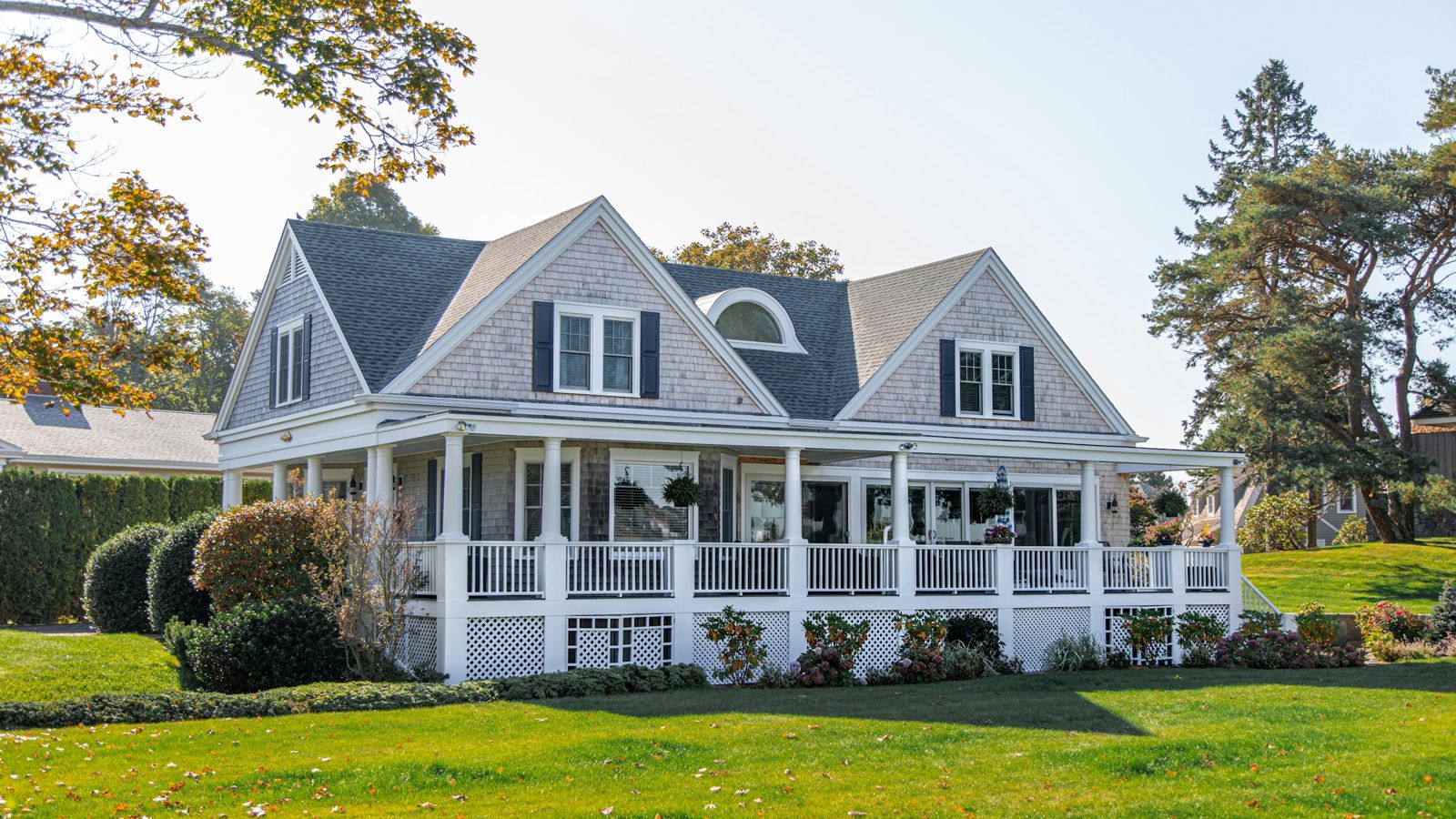
A row of new apartment blocks with balconies at dusk Photo: todd kent / Unsplash
Think of the nurse who has spent six years putting together a deposit and still cannot decide, because the day she signs is the day she can no longer take the job in the next city. Think of the delivery driver whose mother reminds him, kindly and often, that rent is money thrown away. Think of the tenant in Tokyo who has lived in the same flat for eleven years and pays almost what she paid on the first day — while the flat itself is worth a fifth more, and is not hers.
None of the three is being foolish. They are the same decision seen from three different doors, and until recently there was one answer for all of them. Buy when you can. Renting is for waiting.
That answer has expired, and the reason is not a crash. It is that buying has become dearer relative to renting in every rich country you can name — not compared with what a flat cost, but compared with what renting the same flat costs. Since 2015 that gap has widened everywhere: by a tenth in Britain, by two-thirds in Spain. And housing now eats a bigger share of what people earn in five of the six largest rich economies. In France, and only in France, it eats less.
The century of evidence has an end date, and it is 2015
The strongest argument for buying was never a feeling. It was a hundred and forty-five years of numbers across sixteen countries: housing grew a little over 6.6% a year after inflation, ahead of the stock market at 4.7%, and with less than half the lurching. That is not a small edge. It is the reason your parents told you what they told you.
But that record stops in 2015, exactly before the years now under discussion. And it measures the house, not the buyer. It does not subtract the mortgage interest, the boiler, the taxes, or what it costs to get in and back out. With an American thirty-year mortgage at 6.71% and the European benchmark at 2.95%, those subtractions are no longer small print. They are most of the answer.
What you lose by buying is not money
The argument that survives best against buying has nothing to do with returns. A mortgage buys you a floor and sells your ability to move. For the nurse, that is not an abstraction: it is the promotion in another city, the parent who falls ill two hundred miles away, the relationship that ends. Renting is expensive and reversible. Buying is cheaper over time and very hard to undo.
And the reverse is just as real, and gets said less often. A tenant can be told to leave in a letter. An owner in negative equity is also stuck, also unable to move for work, and also cannot defer the roof.
Neither of those is proven worse than the other. They are two different ways of not being safe.
Japan is what happens over eleven years
Japanese rents have risen by 0.9% in eleven years. Not nine per cent. Nought point nine. Over the same period the value of the homes went up by nearly a fifth after inflation.
For the tenant, that looks like the best news in the world, and month to month it is. But stretch it: one household spent eleven years accumulating a fifth more of something, and the other spent eleven years paying for a roof and keeping nothing. Neither did anything wrong. The difference between them is now large enough to be inherited, and it will be.
That is the part of this decision nobody puts on a mortgage calculator: the gap does not open between the prudent and the careless. It opens between the one who could buy and the one who could not.
The two numbers that decide it are the two nobody hands you
Here is the useful part, and it is uncomfortable.
The verdict on the evidence is that buying is no longer the default better decision — and that renting has not been proved better either. Not out of caution. Because the two figures that would settle it are missing, and they are missing from your own case too:
What a round trip actually costs. Not the price. The tax on the purchase, the notary, the registry, the agent, and the same again coming out. Thirty of the thirty-eight richest countries tax you for buying a home, and all thirty-eight tax you for keeping it. The number varies enormously by country, and it is the number that decides everything else.
And how many years you would have to stay for that round trip to be worth making.
You cannot get those two from an index or from a newspaper. You can get them from your own notary, your own bank and your own honest guess about where you will be living in ten years. Until you have them, nobody can tell you whether to buy — and anyone who does is guessing.
The old rule had one great virtue: you did not have to know anything. That is what has been lost. What is left is not worse, only harder, and it is a question you have to answer yourself: not what a home is worth, but how long you are going to stay in it.
The nurse still has not signed. She is not being indecisive. She is missing two numbers, and she is right to wait until she has them.
Where the figures come from
The figures above come from the OECD house price indices, from the Freddie Mac and European Central Bank rate surveys, and from The Rate of Return on Everything, the study of sixteen economies from 1870 to 2015.
They were put to six AI models, given a briefing of verified, dated figures and one instruction: if a figure is not in the briefing, say you do not have it rather than estimate it. Four rounds, twenty-five turns, nothing edited.
Two claims in that debate did not survive checking, and both are marked in the transcript. Neither is a figure: one asserted that smart contracts are already lowering the cost of buying and selling property, with no evidence anywhere that this has happened; the other, made twice, that more financial activity in housing historically means less access — a contested claim offered as settled.
The two decisive numbers were left out of the briefing deliberately, to see what the models would do with a hole. All six said they did not have them. One tried to argue around the gap and was asked by another for a single verified figure.
What is it that interests you here?
Where this came from
The full debate, unedited, with the two struck-through claims visible
Read the full debate on h2aichat.com →